
TRIOS Intraoral Scanner in Issaquah, WA: A patient guide
The TRIOS intraoral scanner gives patients in [city], Washington a faster, cleaner way to capture digital dental impressions. At [practice_name], this device replaces messy putty molds with precise 3D images, helping plan crowns, bridges, implants, veneers, surgical guides, and night guards with efficiency and accuracy.
About the TRIOS intraoral scanner
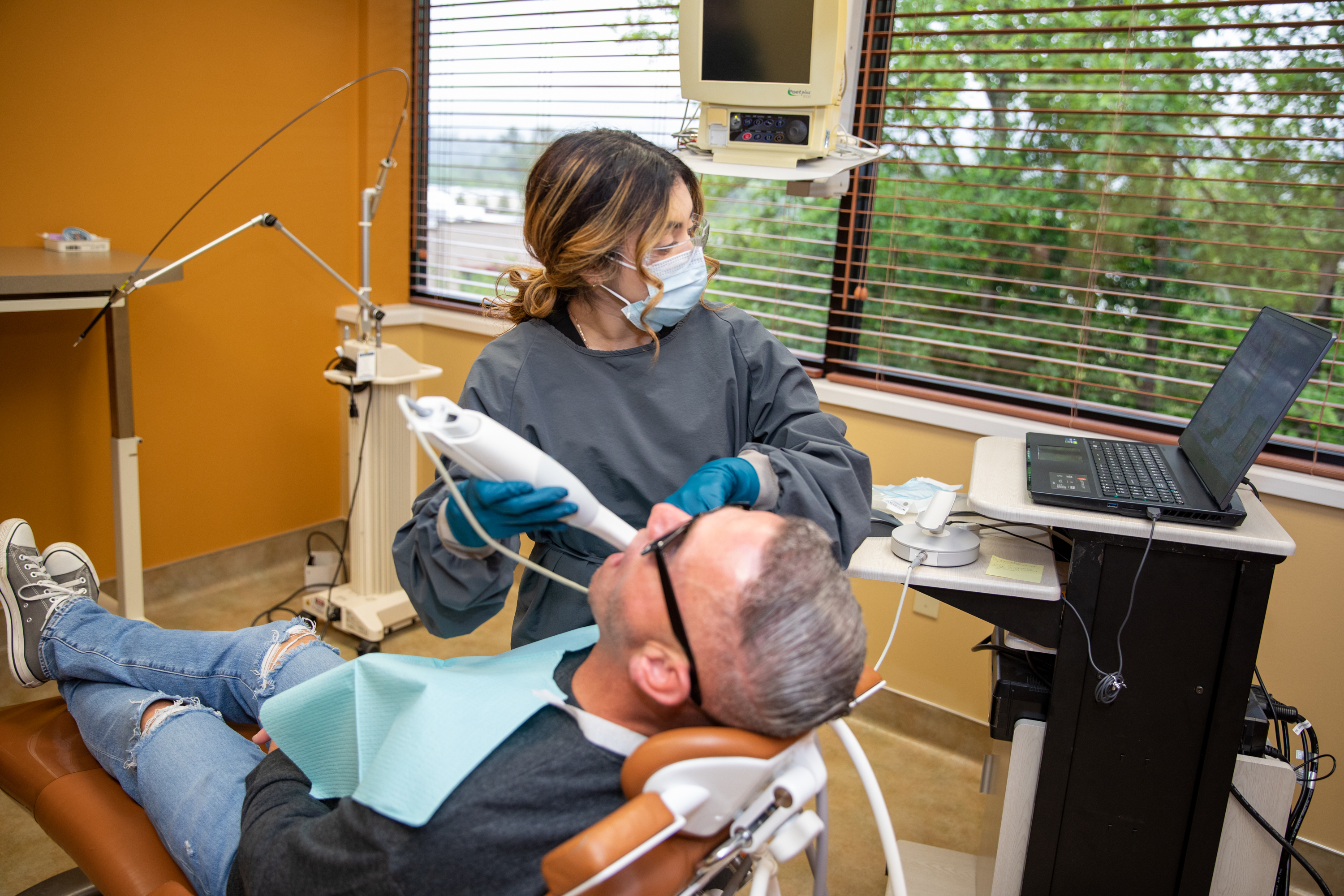
An intraoral scanner is a handheld camera that takes thousands of images per second and stitches them into a lifelike 3D model of your teeth and gums. TRIOS uses safe, non-ionizing light, so there is no radiation exposure. The scan appears on a screen in real time, allowing your dental team to review margins, contacts, and bite relationships and to spot areas that may need a quick rescan for clarity. The final file is sent digitally to the dental lab or in-house design software for precise fabrication.
Why consider digital impressions with TRIOS?
- Comfort improves because there is no impression tray or gooey material to trigger gagging.
- Accuracy is high because digital scans avoid distortions that can occur with traditional materials.
- Speed increases as most arches scan in minutes, and files transmit instantly to the lab.
- Fewer remakes are needed because the team can verify details on-screen and rescan areas immediately.
- Communication is clearer since patients can see a 3D model that explains treatment needs and options.
- Safety is enhanced because the scanner uses light only and requires single-use barrier tips for hygiene.
How intraoral scanning works
Step-by-step scan
After seating you comfortably, the team gently dries and isolates your teeth to help the camera read surfaces. The small scanning wand is moved along the teeth in a smooth pattern, capturing the upper arch, lower arch, and your bite. The software builds a high-resolution 3D model as the scan proceeds. If a crown, bridge, or veneer is planned, the margin and prepared tooth are reviewed in detail, and any areas needing refinement are rescanned within seconds.
From scan to restoration
Once complete, the file is sent to a dental lab or a local design system. For crowns, bridges, veneers, and implant abutments, technicians or software design a custom fit based on the exact 3D anatomy. For surgical guides and night guards, the scan supports precise planning and appliance fabrication. Digital delivery often shortens turnaround time and improves fit on the day of placement.
What to expect at your visit
Most scans take two to five minutes per arch, and a full-mouth scan with bite usually takes five to ten minutes. You can breathe and swallow normally during the scan, and breaks are easy if you need them. There is no powder required for TRIOS in typical cases, and there are no unpleasant tastes. If the gums are tender or there is active bleeding near a tooth margin, a brief pause for tissue management may improve the image and the final fit of your restoration.
When a traditional impression may still be used
Digital impressions serve most restorative and implant-related needs well, but a conventional impression may be appropriate if deep subgingival margins cannot be visualized, if saliva control is challenging, or for certain long-span or removable prosthodontic cases. Your surgeon will advise which approach best supports accuracy and comfort.
TRIOS intraoral scanner explained: Key takeaways
- Digital dental impressions are precise 3D records that guide crowns, bridges, implants, veneers, and surgical appliances.
- TRIOS scanning is fast, comfortable, and free of radiation because it uses visible and near-infrared light.
- High fidelity models can improve fit, reduce adjustments, and enhance communication with the dental lab.
- Moisture control and clear access to the gumline help the scanner capture critical details for an accurate result.
FAQs
Expect a Higher Level of Care Here
Expect a higher level of care where advanced technology, precision, and personalized attention come together to support lasting oral health.