
Restorative Dentistry Services in Issaquah, WA
At [practice_name] in [city], [st], Dr. [doctor_name] provides the surgical foundation for restorative dentistry with implant-supported solutions that rebuild function, comfort, and confidence. As an oral and maxillofacial surgeon, Dr. [doctor_name] focuses on placing the dental implants and rebuilding the bone needed to support long-term, natural-feeling restorations.
Restorative services we provide
- Single Dental Implants
- Multiple Dental Implants
- Full Mouth Dental Implants
- Dental Implants Overview
- Learn about Pricing and Financing
Implant-based restorative dentistry explained
Restorative dentistry replaces missing or damaged teeth and restores the structure needed for comfortable chewing, speech, and appearance. When teeth are missing or failing, a dental implant acts as an artificial tooth root, anchored directly into the jaw. Once the implant integrates with the bone, it supports a custom crown, bridge, or denture that looks and functions like natural teeth.
Because the implant stimulates the jawbone like a natural root, it helps preserve bone, protect facial structure, and avoid the shifting of neighboring teeth that can follow long-term tooth loss.
How implant-supported restoration can help
- Replaces one tooth, several teeth, or an entire arch with a stable, fixed solution.
- Preserves jawbone volume and facial contour after tooth loss.
- Restores comfortable chewing, clear speech, and a natural-looking smile.
- Protects adjacent teeth — no need to grind down healthy enamel as with a traditional bridge.
- Eliminates the slipping, sore spots, and diet limits associated with removable dentures.
- Offers long-term durability with proper home care and regular checkups.
Your treatment timeline
Every plan is tailored to your situation, but most implant-based restorations follow a predictable sequence:
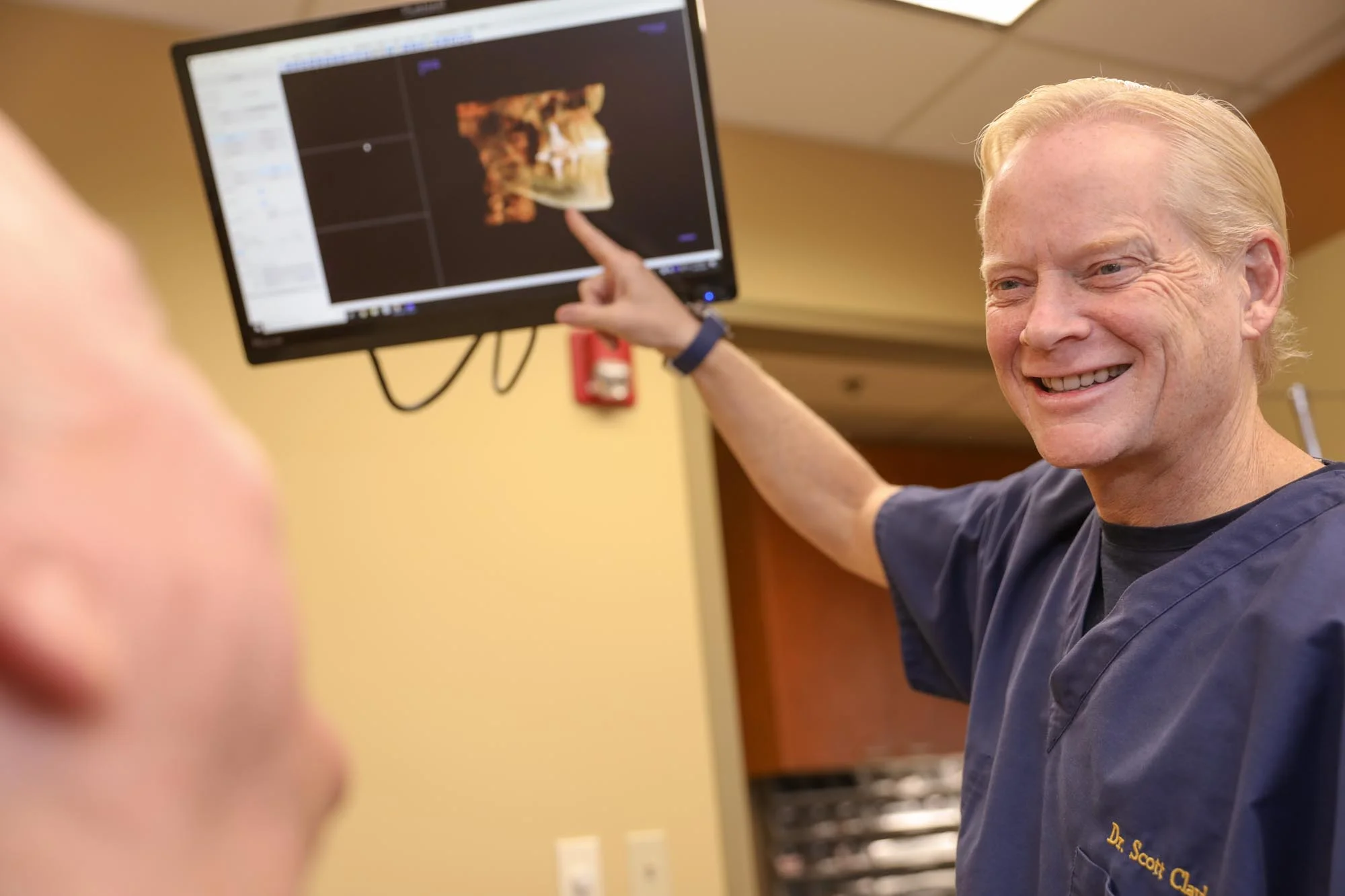
- Consultation and imaging: 3D CBCT imaging, a clinical exam, and a discussion of goals determine the right approach.
- Site preparation: Extraction, bone grafting, or sinus lift may be recommended to build a strong foundation.
- Implant placement: Dr. [doctor_name] precisely places the implant using advanced techniques, including Yomi robot-assisted surgery when appropriate.
- Healing: Over several months, bone fuses to the implant through a process called osseointegration.
- Final restoration: A custom crown, bridge, or denture is placed — usually by your general or restorative dentist in coordination with Dr. [doctor_name].
- Long-term care: Routine checkups and good home hygiene protect your investment for decades.
What to expect
Comfort: Local anesthesia is used for all procedures, and sedation options are available for anxious patients or more complex cases. Most patients report pressure rather than pain during implant placement.
Recovery: Mild soreness and swelling are common for a few days and respond well to ice and recommended medications. Following home-care instructions and avoiding smoking support faster healing.
Longevity: Dental implants have some of the highest long-term success rates in dentistry. With proper care, the implant itself often lasts a lifetime; the attached restoration may be replaced over many years depending on wear.
Tooth replacement options at a glance
- Single-tooth implant: Replaces one missing tooth without affecting neighboring teeth.
- Multiple-tooth implants: Replaces several teeth using individual implants or an implant-supported bridge.
- Full-arch implants: Replaces an entire upper or lower arch with a stable, fixed set of teeth — eliminating loose dentures.
- Implant-supported dentures: Secures removable dentures in place for better stability, comfort, and chewing power.
FAQs
Expect a Higher Level of Care Here
Expect a higher level of care where advanced technology, precision, and personalized attention come together to support lasting oral health.